
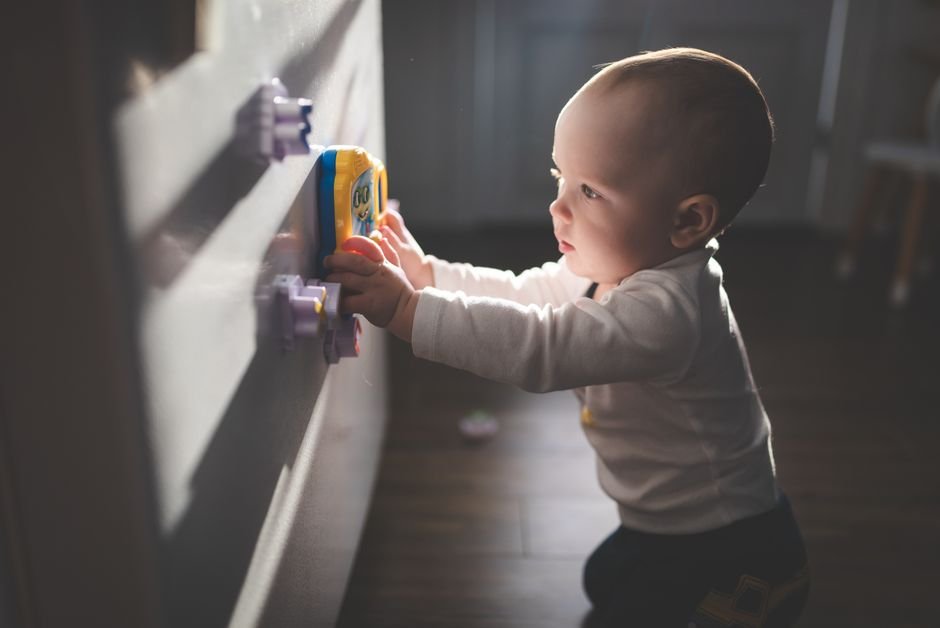
There is a reason grandparents say children “grow up so fast.” In the first five years, a child’s brain does more building than at any other time in life — forming the deep foundations for language, thinking, emotion and relationships. What happens in these years doesn’t just shape childhood; it echoes across a whole lifetime. Here is what the science reveals, and what it means for the everyday choices you make as a parent.
A brain built at astonishing speed
A baby is born with almost all the brain cells they will ever have — around 86 billion. What’s missing are the connections between them. In the early years, the brain wires itself at a breathtaking pace, forming more than a million new neural connections every single second. These connections are the physical architecture of everything your child will one day do: speak, reason, imagine, love and learn.
By the age of five, roughly ninety percent of a child’s brain has already developed. That single fact reframes the early years entirely: preschool is not a warm-up before “real” school — it lands squarely in the most important building phase of a human brain.
How the building actually happens
Brains aren’t built by flashcards or screens. They are built through what scientists beautifully call “serve and return” — the thousands of tiny back-and-forth exchanges between a child and a caring adult. Your baby babbles (a serve); you babble back (a return). Your toddler points at a dog; you say, “Yes, a doggy! He’s big!” Each little exchange lays down connections.
graph LR; A[Child serves: a look, sound or point] --> B[Adult returns: a word, smile or touch]; B --> C[A brain connection strengthens]; C --> D[Child feels safe and understood]; D --> A;
Notice there is no expensive toy in that loop — only a responsive, loving adult. That is genuinely the most powerful brain-building tool in the world, and every parent already owns it.
Every time you respond warmly to your child — a word, a cuddle, a shared giggle — you are physically building their brain. Ordinary moments are the education.
What growing brains need most
The recipe for healthy early development is refreshingly simple and free. Children need:
- Responsive relationships — adults who notice and answer them warmly.
- Rich talk — being spoken to, read to and sung to, all day long.
- Play and exploration — freedom to touch, test, build and pretend.
- Good food and sleep — the fuel a fast-growing brain runs on.
- Safety and routine — the calm that lets a child feel free to learn.
Notice what’s not on the list: screens, expensive toys and academic drills. Little children learn through relationships and play, not worksheets.
The remarkable power of talk
Of everything on that list, one deserves special mention: talk. The number of words a child hears in these years strongly predicts their later language and reading. Children in language-rich homes can hear millions more words than their peers — a gap that shows up years later at school. The wonderful news is that this is completely within a parent’s reach, and it costs nothing.
“Narrate” your day out loud: “Now we’re washing the red apple… it’s cold and smooth… let’s cut it in two.” To you it feels like chatter. To your child’s brain, it’s a feast.
Why stress matters too
Brains are built by warm experiences — but they can also be shaped by stress. Brief, manageable stress with a comforting adult nearby actually helps children learn to cope. It is constant, overwhelming stress without a supportive adult — what scientists call “toxic stress” — that can disrupt healthy development. The buffer against it is always the same: a calm, present, caring grown-up. Your steady presence is not just comforting; it is protective.
What this means for choosing preschool
If ninety percent of the brain is built by five, then the place your child spends these years genuinely matters. It doesn’t need flashy technology or early academics. It needs warm, responsive teachers, rich conversation, and plenty of play — the very same recipe as home, extended into a caring community. When you visit a preschool, watch how the adults talk with the children. That, more than any worksheet on the wall, is where brains are built.
You don’t need to be a perfect parent or buy anything special. Talk, read, play, cuddle and respond. In these ordinary, loving moments, you are giving your child the most extraordinary start.
A once-in-a-lifetime window
The brain stays capable of learning for our whole lives — but it will never again build itself as quickly or as easily as it does before age five. These years are a gift that doesn’t come around twice. The best way to use them isn’t to rush toward academics, but to fill your child’s days with love, language and play. That is the science — and, happily, it is also exactly what children need most.
Reading: the single best habit
If there were one thing to do every day of these five years, it would be to read together. Sharing books does something almost magical for a young brain. It pours in new words far richer than everyday chat. It builds attention and imagination. And — just as importantly — it wraps learning in the warmth of your lap and your voice, so a child grows up feeling that books mean closeness and comfort.
You don’t need to read “properly” or finish every page. With little ones, the best reading is playful: point at the pictures, make the animal sounds, ask “What do you think happens next?”, let them turn the pages and choose the same book for the hundredth time. That repetition isn’t boredom — it’s how young brains master language. Ten minutes of shared story a day is one of the most powerful, and most joyful, gifts you can give.
Tie reading to a moment that already happens every day — after the bath, before sleep. A predictable story-time becomes something a child looks forward to, and a habit that can last a lifetime.
Every child grows at their own pace
Amid all this talk of fast-growing brains, one gentle reminder matters most of all: children are not on a race track. Some walk early and talk late; some are the other way round. Development happens in fits and starts, with plenty of pauses and leaps. Comparing your child to the neighbour’s — or to a chart on the internet — rarely helps and often worries.
What every child needs is the same: a loving adult who follows their pace, celebrates their small wins, and offers steady warmth through the wobbles. If you ever feel genuinely concerned about your child’s development, trust that instinct and speak to your doctor early — support in the early years is especially powerful. But for the vast majority of children, the recipe is beautifully simple. Talk, read, play, cuddle and respond. You are already, in these ordinary loving moments, building an extraordinary brain — one connection at a time.

 Ask Amma
Leave a Reply