Choosing your child’s first school is one of the most emotional decisions a parent makes. The brochures all look lovely, the websites all promise the best, and it’s hard to know what truly matters. So let’s cut through the noise. Decades of research on early childhood point to a handful of things that genuinely predict a good preschool — and, reassuringly, they have little to do with shiny buildings or long lists of “activities.” Here is what to look for, and the questions to ask.
What actually matters (and what doesn’t)
It’s easy to be dazzled by facilities and marketing. But research consistently finds that the things which most shape a child’s experience are quieter and more human:
| What truly matters | What matters far less |
|---|---|
| Warm, well-trained, stable teachers | A big, fancy building |
| A small number of children per adult | The longest list of “extra” classes |
| Learning through play | Early reading & writing drills |
| A safe, calm, happy atmosphere | Flashy technology & screens |
| Kind communication with parents | Impressive-sounding brand names |
None of this means a nice building is bad. It simply means it should never be the reason you choose. A modest room with a wonderful teacher beats a beautiful campus with a distracted one, every single time.
The single most important factor
If you remember only one thing, remember this: the teacher matters more than anything else. Young children learn through relationships. A warm, patient, well-trained teacher who truly knows your child will shape their early years more than any facility or curriculum ever could.
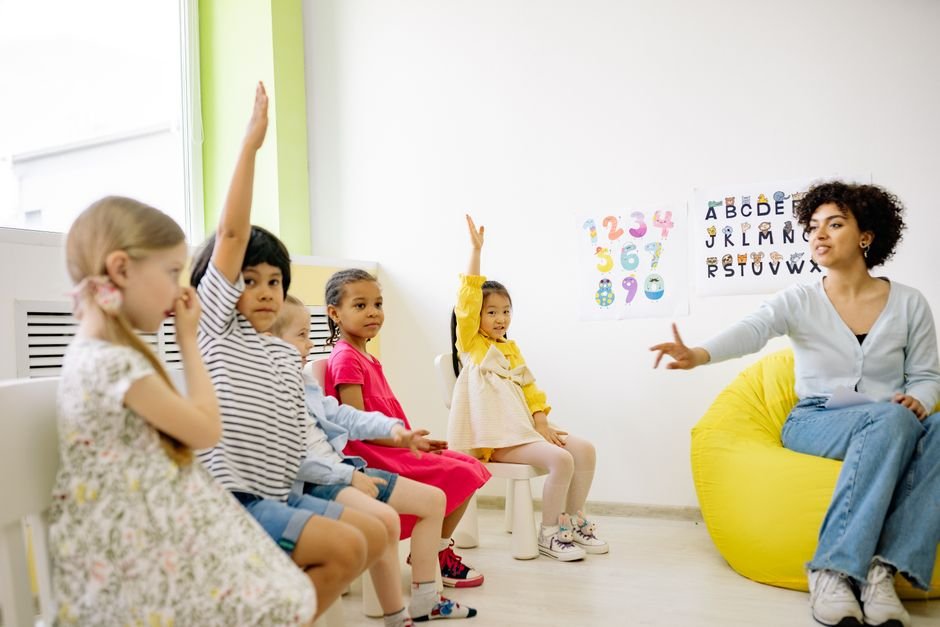
When you visit, watch the teachers closely. Are they down at the children’s level, smiling, listening, speaking gently? That warmth is the real curriculum.
The ratio question
Alongside the teacher comes a simple, powerful number: how many children each adult cares for. Fewer children per adult means more attention, more conversation, more cuddles when needed, and more safety. As a gentle guide, look for something in these ranges:
These aren’t rigid rules, but if one adult is managing a very large group of tiny children, it’s worth asking how each child gets individual attention.
A simple way to decide
When you’re standing in a preschool trying to read your own heart, a few clear questions cut through the noise. Walk through them in order:
graph TD; A[Visiting a preschool] --> B{Do the children look happy and settled?}; B -- No --> X[Trust that - keep looking]; B -- Yes --> C{Are teachers warm and attentive?}; C -- No --> X; C -- Yes --> D{Is there real play, not just drills?}; D -- No --> X; D -- Yes --> E{Does it feel safe, calm and kind?}; E -- Yes --> G[This could be the one - visit again]; E -- No --> X;
Green flags and red flags on a visit
Always visit in person if you can — ideally while children are there. A quiet, empty showroom tells you little; a busy classroom tells you everything. Here’s what to notice:
- Children are busy, chatting and content
- Teachers kneel down to a child’s level
- Play areas, books and art everywhere
- Children’s own artwork on the walls
- Staff welcome your questions warmly
- Children sitting silently for long stretches
- Lots of worksheets, little play
- Staff seem rushed, stressed or cold
- Vague or defensive answers to questions
- High teacher turnover year to year
Questions worth asking
You are interviewing them as much as they are welcoming you. A good preschool will happily answer all of these:
- How do the children spend a typical day?
- How many children are there per teacher?
- What training and experience do your teachers have?
- How long do teachers usually stay with you?
- How do you help a child who is sad or settling in?
- How will you keep me updated about my child?
- How do you keep the children safe?
After the facts and figures, notice how the place feels. Can you picture your child happy here? Do you feel welcome? A parent’s instinct, paired with these questions, is a remarkably good guide.
The bottom line
The “best” preschool isn’t the biggest, the most expensive or the one with the most activities on the timetable. It’s the one where your child is known and loved — where warm teachers help them play, explore and grow at their own pace. Look past the marble and the marketing, watch the faces of the children, and trust what you see and feel. Choose warmth over shine, and you will rarely go wrong.
The settling-in period tells you a lot
How a preschool handles those first tearful mornings reveals its whole character. Starting school is a big step for a little person, and a caring setting expects the tears, plans for them, and never rushes a child. Ask how they help a new child settle. A thoughtful answer — a gentle phased start, a “key” teacher who becomes the child’s anchor, permission to bring a comfort toy, warm daily updates to anxious parents — tells you far more than any glossy brochure.
Be wary of any place that seems impatient with a crying child, or that discourages you from staying to ease the transition. Warmth in the hard moments is the truest test of a preschool’s heart. And trust your child’s own signals over the following weeks: a child who, after a reasonable settling period, skips in happily and chatters about their day has told you everything you need to know.
Almost every child cries at first — that alone isn’t a red flag. Look instead at the trend: are mornings slowly getting easier over two or three weeks? That gentle improvement is the sign of a good fit.
Thinking about cost and value
Fees matter for every family, and it’s natural to weigh them. But it helps to separate cost from value. The most expensive preschool isn’t automatically the best, and a very cheap one may be cutting the very corners — teacher training, small groups, safety — that matter most. What you are really paying for is people: kind, well-trained, stable teachers who stay. That is where good preschools invest, and it is worth paying for.
So when you compare options, look beneath the headline fee. Ask what the ratio is, how teachers are trained and how long they stay, and what a typical day actually holds. A slightly higher fee that buys warm, lasting teachers and small groups is usually better value than a bargain that doesn’t. In the end, the best preschool is the one where your child is genuinely known and loved, at a cost your family can sustain without strain — because a calm, unstressed parent is part of a happy child’s world too.
 Ask Amma
Leave a Reply