
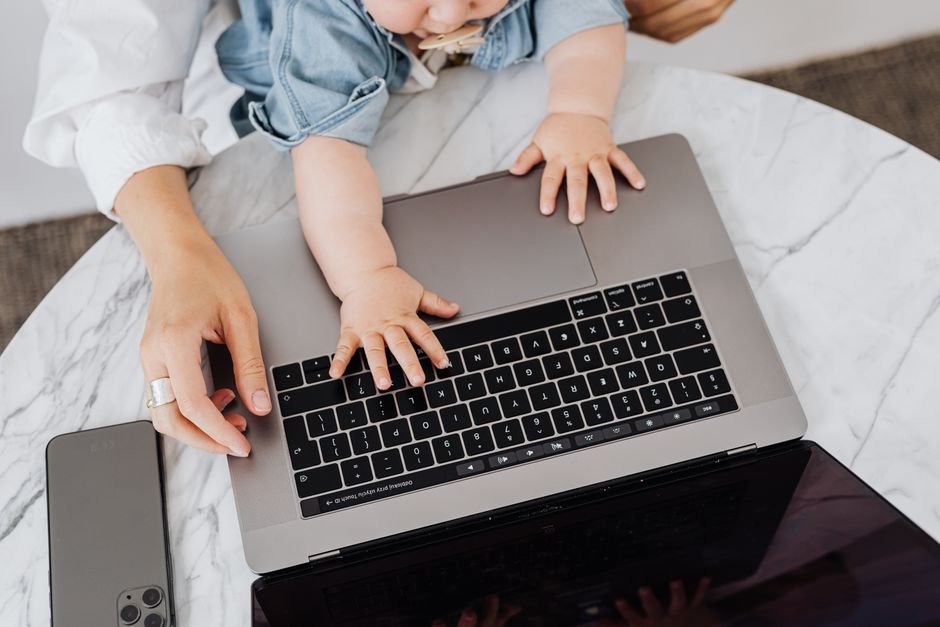
Few questions worry parents of little ones more than screens. How much is too much? Is a video call with grandma the same as a cartoon? Will a “learning” app actually teach my child anything? The honest answer is that screens aren’t simply good or bad — but for children under five, how, what and with whom they watch matters enormously. Here is what the science says, translated into plain, practical guidance.
What the guidelines actually recommend
Major health bodies — the World Health Organization, the American Academy of Pediatrics and India’s own paediatric guidance — broadly agree on sensible limits for the early years:
But here is the part parents often miss: the number of minutes is the least important thing. Two children can each watch an hour a day and have completely different experiences depending on what they watch and whether an adult is beside them.
It’s not just how long — it’s what they watch and who is watching with them. A shared, slow, gentle programme beats a solo hour of fast, flashy content every time.
Why the early years are different
Babies and toddlers learn best from real, back-and-forth interaction with real people — the coos, pauses and eye contact that a screen cannot return. Researchers call this the “video deficit”: under about two-and-a-half, children learn a task far better from a live person than from the very same demonstration on a screen. Their brains are wired for relationship, not broadcast.
Screens can also crowd out the things that grow young brains most: unstructured play, conversation, movement and sleep. An hour on a tablet is an hour not spent stacking blocks, chatting at dinner or running in the park. That opportunity cost — not the screen itself — is the real concern.
Not all screen time is equal
Lumping all screen time together is like lumping all food together. A shared story app and a stream of fast, ad-filled clips are worlds apart:
| Nourishing screen time | Empty screen time |
|---|---|
| Video-calling grandparents | Background TV during meals & play |
| Watching a gentle show together and talking about it | Solo watching for long stretches |
| Slow-paced, age-appropriate stories | Fast, flashy clips with constant rewards |
| A video that inspires real-world play afterwards | Autoplay that never lets them stop |
A simple way to decide
When you’re unsure about a programme or app, run it through three quick questions. If you can answer “yes” to all three, it’s almost certainly fine.
graph TD; A[Is my child about to watch something?] --> B{Is it slow, gentle and age-right?}; B -- No --> X[Skip it - choose something calmer]; B -- Yes --> C{Am I watching with them?}; C -- No --> Y[Sit together and talk about it]; C -- Yes --> D{Does it spark real play or chat after?}; D -- Yes --> G[Great - this is nourishing screen time]; D -- No --> Y;
The three C’s worth remembering
Child-development researchers often boil the evidence down to three C’s. They’re easy to hold in your head in a busy moment:
- Content — Is it slow, simple, gentle and made for their age?
- Context — Are you watching together and talking about it, or is it on alone in the background?
- Child — Does this child stay calm and curious with it, or wound-up and cranky afterwards?
Trust that last one especially. You know your child. If screens leave them irritable, unfocused or hard to settle, that’s useful information — more useful than any stopwatch.
Gentle habits that work
You don’t need to ban screens or feel guilty about them. A few calm habits keep them in a healthy place:
- Keep meals and the hour before bedtime screen-free — screens near sleep make settling harder.
- Watch together when you can, and chat about what you see: “Where do you think the puppy is going?”
- Turn off autoplay and background TV — a quiet room invites play and talk.
- Use a clear, kind ending: “One more song, then we switch off and build a tower.”
- Keep bedrooms screen-free and let the child see you put your phone away too.
- Never worry about a video call with family — that’s real relationship, not passive watching.
On a hard day, a show so you can cook dinner is completely fine. Aim for good habits most of the time, not perfection every time. A calm parent matters more than a perfect screen record.
The bottom line
Screens are a small part of your child’s big, rich world. Keep them slow, keep them shared, and keep them from crowding out play, talk, movement and sleep — and they can have a modest, even positive, place in early childhood. The most powerful “educational technology” for a young child is still, by a wide margin, a loving adult who has the time to talk, read and play.
What to reach for instead
The easiest way to keep screens in their place is to have something better ready to hand. When you feel the tablet is becoming a habit, try one of these instead — none of them needs much preparation, and all of them build far more than a screen ever could:
- A basket of “busy” toys — blocks, cups, cloths, safe kitchen bits — kept ready for exactly those tricky moments.
- Drawing, stickers, play-dough or a colouring sheet at the kitchen table while you cook.
- An audio story or nursery rhymes — all the language of a screen, none of the visual overload.
- “Help me” jobs: washing vegetables, matching socks, stirring a bowl. Little ones love feeling useful.
- A quick trip outside — even ten minutes in a garden or park resets everyone’s mood.
The goal isn’t to fill every second, either. A bored child staring at the wall will, given a little time, invent a game — and that self-made play is worth more than any app.
Signs screens may be affecting your child
Every child is different, so the best guide is your own child’s behaviour. A few gentle warning signs suggest it’s time to trim back or change what they watch:
- Big meltdowns when the screen goes off
- Trouble settling to sleep after watching
- Losing interest in toys, books or play
- Seeming wound-up or unfocused afterwards
- Switches off calmly with a warning
- Happily returns to play and chat
- Sleeps and eats well
- Screens are one small part of a full day
If you notice the warning signs, you don’t need to panic or ban screens overnight. Small changes — slower shows, watching together, a firm screen-free hour before bed — usually settle things within a week or two. Children are wonderfully adaptable, and they take their cues from us. When they see us choose conversation, books and play over our own phones, they learn, quietly and powerfully, to do the same.

 Ask Amma
Leave a Reply